Vinyl, Mesh, or Fabric? How to Choose the Right Banner Material
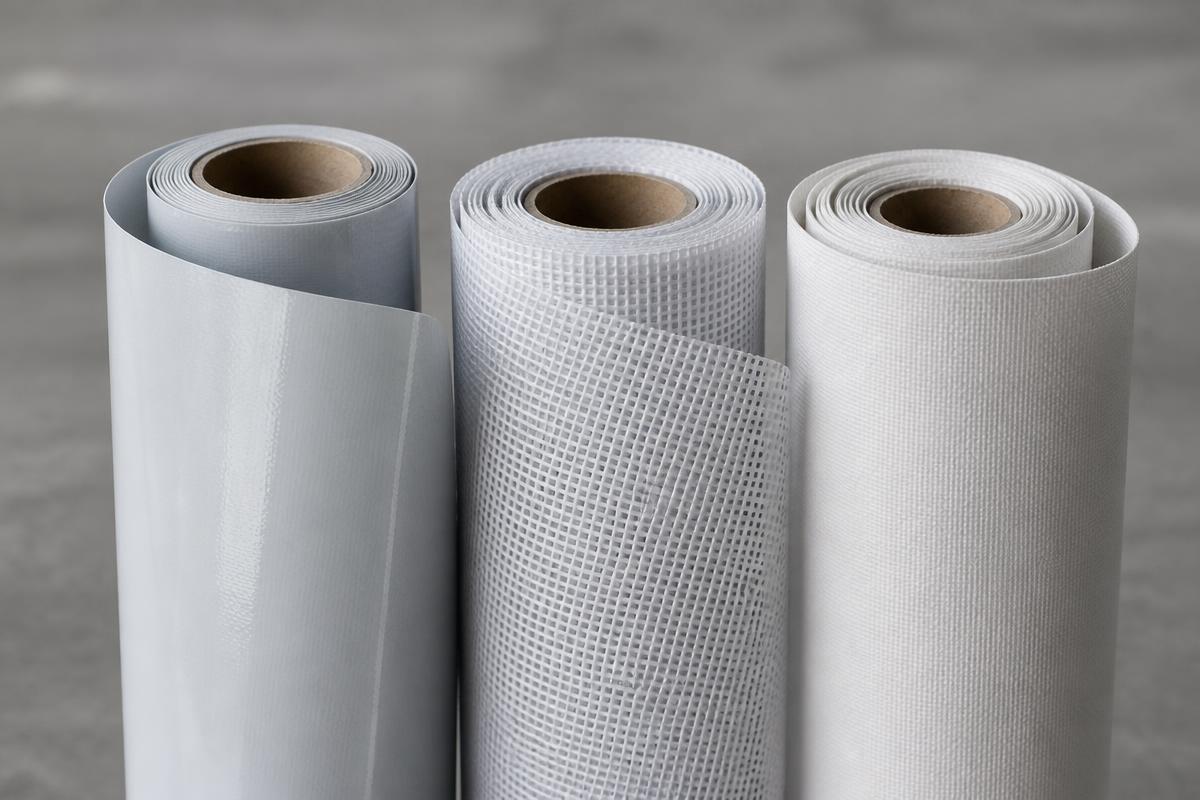
Banner material is decided by where the banner hangs, how long it stays up, and how it's displayed. This guide explains vinyl, mesh, and fabric, plus hems, grommets, and the finishing details that decide whether a banner survives a Colorado season.
· 7 min read
By Jeni Wilkins, Nex-Jen Print
Most banner disappointments are material choices, not printing problems. A banner that curls in the sun, tears off a fence in March wind, or wrinkles permanently in a storage tube was usually the wrong material for the job, not a bad print.
Three questions decide almost every banner spec: where does it hang, how long does it stay up, and how does it travel?
Scrim vinyl, the everyday workhorse
Scrim vinyl is a woven-reinforced PVC and is the default for most banners. It is opaque, holds saturated color, resists tearing, and wipes clean. Common weights are described in ounces per square yard, heavier vinyl is stiffer and more durable, lighter vinyl is cheaper and easier to ship.
Use it for: grand openings, sales, sponsor banners, event entrances, anything hung flat against a wall or on a frame.
Watch out for: sustained high wind. Solid vinyl acts like a sail. On an exposed fence it will either tear at the grommets or take the fence with it.
Mesh vinyl, for wind
Mesh is perforated so air passes through. You give up a little color density and a little opacity, and you gain a banner that can live on a chain-link fence, a construction barrier, or a building face through a windy season.
Use it for: ball field fences, arena and rodeo sponsor banners, construction sites, multi-month outdoor placement.
Watch out for: backlighting. Because mesh is perforated, a bright background shows through. Design with heavy contrast and avoid fine detail.
Fabric, for indoor presentation
Printed polyester fabric is the premium indoor option. It has a soft matte surface with no glare under overhead lighting, folds into a bag instead of rolling into a tube, and many fabrics release wrinkles after hanging or with light steam.
Use it for: trade show backdrops, conference stage banners, retractable stands, table throws, anything you'll pack and travel with repeatedly.
Watch out for: outdoor exposure. Fabric is generally not the right answer for weather.
Rigid substrates, when a banner isn't a banner
Sometimes the right answer isn't flexible at all. Corrugated plastic is the standard for yard signs and short-term directional signage. Foam board suits indoor presentations and easel displays. Aluminum composite panel is the long-term outdoor choice for permanent signs and parking or building identification.
If your "banner" needs to stand on its own or stay flat, say so early, it changes the product entirely.
Finishing details that matter more than people expect
- Hems: folded and welded edges keep the banner from stretching and tearing at attachment points. Standard on nearly every outdoor banner.
- Grommets: metal eyelets for rope, zip ties, or bungees. Typically spaced every two to three feet; more grommets means better load distribution outdoors.
- Pole pockets: sewn sleeves at the top and bottom for a pole or dowel. Common for street-style and stage banners.
- Wind slits: sometimes requested, but mesh is usually the better solution; slits weaken the banner and interrupt the artwork.
- Reinforced corners: worth it for anything that will hang through a full season.
Designing for distance
A rough working rule used across the sign trade: allow about one inch of letter height for every ten feet of viewing distance. A banner read from a hundred feet away needs roughly ten-inch letters. Most banners fail because they carry too many words, not because they're too small.
Keep it to one clear message, one supporting line, and one way to respond. Leave quiet margin around the edges so the message isn't swallowed by hems and grommets.
Weather in Colorado
Colorado adds two real stresses: intense sun at altitude and sudden wind. UV exposure fades any print over time, and the darker and more saturated the artwork, the more visible that fade becomes. Wind is the reason mesh exists. If a banner will be exposed on open ground for more than a few weeks, plan for both.
Common questions
- How long does an outdoor vinyl banner last?
- Expected life depends on material weight, ink, sun exposure, and how it's mounted. A hemmed and grommeted scrim vinyl banner is commonly specified for seasonal outdoor use, while permanent outdoor identification is usually better served by a rigid sign panel. Ask for a recommendation based on how long you need it to hold up.
- What size should my banner be?
- Start with the space and the viewing distance, not a standard size. Measure the fence, wall, or booth opening, then check that your main line of text is about one inch tall for every ten feet of reading distance.
- Can a banner be double-sided?
- Yes. Double-sided banners usually use a blockout material with an opaque layer so the back image doesn't ghost through. It is a different product from a single-sided banner, so mention it when you request a quote.
- How should I store a banner between events?
- Roll vinyl banners with the print facing out around a tube rather than folding them, creases in vinyl tend to be permanent. Fabric banners can be folded and usually relax after hanging.
Not sure which banner material fits your project?
Describe where the banner will hang and how long it needs to last. We'll recommend the material and finishing, and send you a quote.
Keep reading
The Power of Large Format Printing: How Banners, Signs, and Trade Show Graphics Transform Your Brand
Large format printing covers banners, signs, posters, and trade show graphics printed at display size. It is one of the lowest cost-per-impression ways to be seen, here is how it works and how to plan a project.
The Trade Show Print Checklist: What to Order and When
A booth that looks intentional is mostly planning. Here's the full list of printed items a trade show booth needs, how to lay out a 10×10, and a timeline that keeps you out of rush territory.