Screen Print, Embroidery, or DTF? Choosing How to Decorate Team Apparel
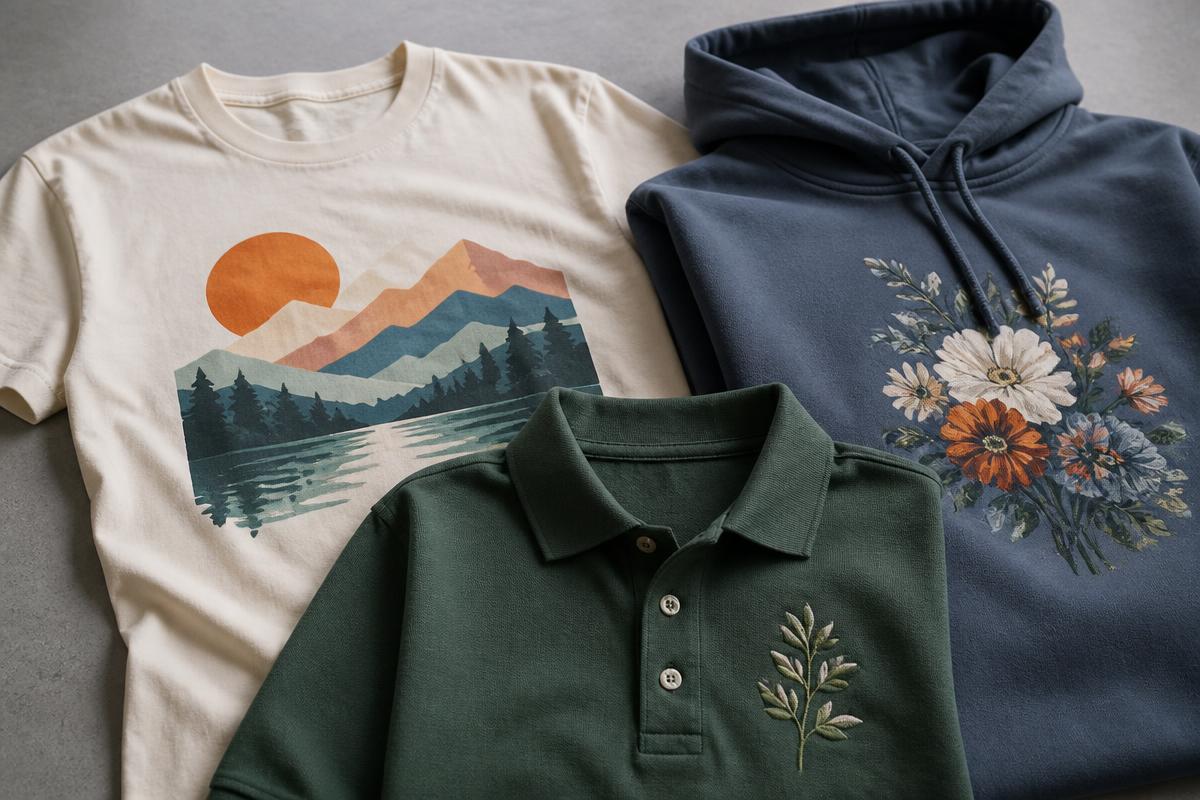
The decoration method matters as much as the shirt. A practical comparison of screen printing, embroidery, direct-to-film, heat transfer vinyl, and sublimation, with the quantity and fabric rules that decide which one fits.
· 7 min read
By Jeni Wilkins, Nex-Jen Print
Two shirts with the same logo can feel completely different depending on how that logo got there. Decoration method drives cost, durability, the look of the finished piece, and which fabrics are even possible, so it's worth understanding before you pick a garment.
Screen printing, best for volume
Ink is pushed through a stencil screen, one screen per color. Setup takes real work, which is why screen printing is expensive for ten shirts and remarkably cheap for two hundred. Each additional ink color adds another screen and another setup.
The result is durable, soft when printed well, and holds up to years of washing. It's the standard for team shirts, event tees, fundraiser runs, and staff uniforms.
Best for: 24 pieces and up, designs with a limited number of flat colors.
Less suited to: small runs, photographic images with thousands of colors, or orders where every shirt needs a different name.
Embroidery, best for professional polish
Thread is stitched directly into the fabric. Nothing looks more finished on a polo, cap, jacket, or bag, and nothing lasts longer, embroidery generally outlives the garment.
Cost is driven by stitch count, not color count, so a dense large logo costs more than a simple small one, and extra thread colors are usually free. There's typically a one-time digitizing charge to convert your logo into a stitch file, after which reorders are straightforward.
Fine detail and small text are the limitation. Thread has physical width; type under about a quarter inch tall tends to fill in and become unreadable. Gradients and photographs don't translate.
Best for: polos, caps, jackets, bags, staff uniforms, anything meant to look corporate.
Direct-to-film (DTF), best for small runs and full color
The design is printed onto a film, powdered with adhesive, and heat-pressed onto the garment. There are no screens, so there's no per-color setup, a twelve-color photographic design costs the same as a one-color logo.
This makes DTF the practical answer for small quantities, one-offs, personalization, and complex artwork. It also bonds to a wide range of fabrics, including performance polyester blends that are difficult to screen print.
The tradeoff is hand-feel and longevity: the design sits on top of the fabric as a thin flexible layer rather than soaking into it, and with heavy wear it won't match a well-cured screen print. Wash inside out in cold water and skip the dryer's highest heat.
Best for: 1 to 50 pieces, full-color artwork, individual names and numbers, mixed garment orders.
Heat transfer vinyl (HTV), best for names and numbers
Solid-color vinyl is cut to shape, weeded, and pressed on. It's durable and vivid, and it's the standard for athletic numbers and individual player names. Because each color is a separate layer, it's impractical for detailed multi-color artwork.
Sublimation, best for all-over polyester
Heat turns dye into gas that bonds into the fibers themselves. The result has zero hand-feel, you literally cannot feel the print, and it will not crack or peel because there's no layer sitting on top.
The catch is real: it only works on polyester (or polymer-coated items) and only on light colors, because the dye is translucent and can't lighten a fabric. Within those limits it's the best option for all-over designs, performance jerseys, and hard goods like mugs and metal panels.
Choosing quickly
- Large order, simple logo, cotton tees: screen printing.
- Polos, caps, jackets, or anything worn to look professional: embroidery.
- Small order, many colors, or individual personalization: DTF.
- Athletic names and numbers: heat transfer vinyl.
- All-over print on light polyester: sublimation.
Don't forget the garment itself
Fabric decides comfort and drape as much as decoration decides appearance. 100% cotton is soft and breathable and shrinks somewhat. Polyester wicks moisture and holds shape, which is why it dominates athletic wear. Blends and tri-blends split the difference and are what most people mean when they say a shirt feels nice.
Order a size run, not a guess. Fit varies between brands and between men's, women's, and youth cuts, and a team order with no smalls or no 2XLs is a problem you can't fix after printing.
Common questions
- Is screen printing or DTF better?
- It depends on quantity and artwork. Screen printing wins on cost and long-term durability once you're past roughly two dozen pieces with a limited color count. DTF wins on small runs, full-color or photographic designs, and personalization, because there is no per-color setup.
- What is the minimum order for custom shirts?
- Screen printing usually has a minimum because of screen setup, commonly around a dozen to two dozen pieces. DTF and heat transfer vinyl can be produced in very small quantities, including single garments. Tell us your quantity and we'll match the method to it.
- Why does embroidery cost more for some logos?
- Embroidery is priced by stitch count. A large, dense logo requires far more stitches than a small simple one. Thread colors generally don't add cost, and there is usually a one-time digitizing fee to convert artwork into a stitch file.
- Can you print on performance or moisture-wicking fabric?
- Yes. Polyester and performance blends are common, though they behave differently than cotton, DTF and sublimation are frequently the better fit. Mention the garment fabric when you request a quote.
Outfitting a team, staff, or event?
Tell us the garment, the quantity, and how many colors are in your logo. We'll recommend the decoration method and send a quote.
Keep reading
The Trade Show Print Checklist: What to Order and When
A booth that looks intentional is mostly planning. Here's the full list of printed items a trade show booth needs, how to lay out a 10×10, and a timeline that keeps you out of rush territory.
How to Send Print-Ready Artwork: Bleed, Resolution, and Color
Most print delays come from artwork, not printing. This is a plain-language guide to bleed, safe margins, resolution, CMYK color, fonts, and file formats, and what to do if all you have is a logo.